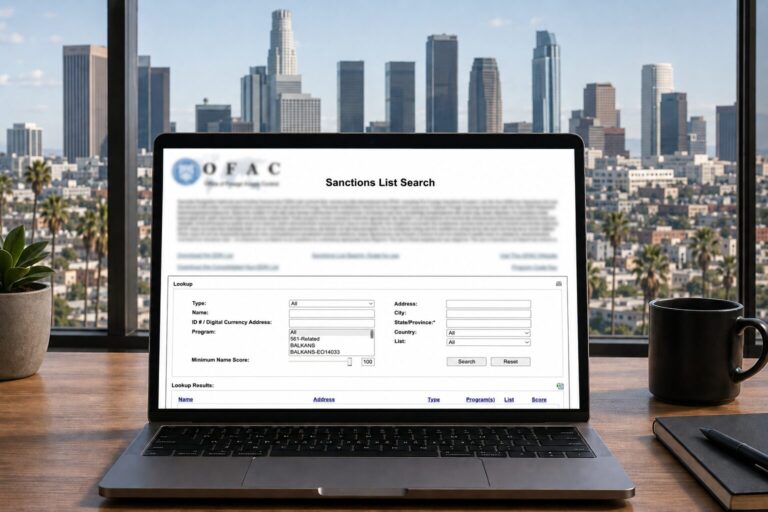
Inclusion on the U.S. Department of the Treasury’s Office of Foreign Assets Control (“OFAC”) Specially Designated Nationals and Blocked Persons (“SDN”) List is one of the most severe measures the U.S. government can take against an individual, entity, or their property. Typically without any prior government notice, SDN listings result in full blocking sanctions: all property and interests in property that are or come within the United States or the possession or control of U.S. persons, wherever located, must be “frozen,” and U.S. persons are prohibited from dealing in virtually any transaction with the listed party unless authorized. For many, this translates into bank accounts being blocked, counterparties abruptly terminating relationships, and an immediate loss of access to the U.S. financial system.
Understandably, individuals and companies—including owners of aircraft or vessels—identified on the SDN List want to know whether removal is even possible and how to go about it. OFAC does, in fact, maintain an administrative process for seeking delisting under its regulations. Indeed, the U.S. government has emphasized that “[t]he ultimate goal of sanctions is not to punish, but to bring about a positive change in behavior,” and each year OFAC removes numerous listed parties from the SDN List following administrative review.
This article offers a practitioner‑oriented overview of the OFAC SDN list removal process under 31 C.F.R. § 501.807, including key considerations and strategic insights for parties seeking removal from the SDN List. It has been updated since its initial May 11, 2026 publication to reflect OFAC’s June 29, 2026 launch of its online Reconsideration Portal and accompanying guidance, which clarify expectations for delisting petitions and related document requests. Moving forward, the Reconsideration Portal is the primary channel for submitting SDN list removal requests, and counsel can use its structured process to better align petitions with OFAC’s framework.
Step 1 — Investigate Why the SDN Designation Was Made
As with other U.S. Restricted Party delisting contexts, the starting point is to understand why OFAC or the U.S. Department of State (State) designated the person (or designated vessel/aircraft) in the first place. The specific legal and factual basis for the SDN listing will inform both the strategy of the delisting process, the type of supporting evidence and arguments that will be most persuasive, and potential pitfalls that may arise.
Legal Designation Authorities
SDN designations are made under a variety of statutory and executive authorities (for example, sanctions programs targeting terrorism, narcotics trafficking, corruption, proliferation, cyber activity, and many specific country/region‑based programs). Each designation is tied to one or more legal authorities and their corresponding designation criteria set out in the relevant statute or executive order, and their implementing regulations. OFAC typically announces new or amended SDN designations via Treasury press releases, updates to its own Recent Actions page, and through public notice in the Federal Register. The underlying Press Release, if available, will provide a high‑level description of the conduct at issue along with the relevant legal authority (e.g., Executive Order 14024). The Federal Register notice typically provides the specific designation criteria invoked by OFAC under the relevant legal authority (e.g., §1(a)(iii)(A) of Executive Order 14024).
For designations made by State, as delegated by the President—while administered by OFAC—the agency typically publishes its own underlying press releases. While this public material is often sparse, it can provide a helpful starting point for counsel to reconstruct the U.S. government’s apparent rationale.
Public Record
In some matters, related U.S. government enforcement actions or criminal cases may provide additional clues regarding the underlying conduct relied upon by the designating agency. In many instances, the designating agencies also rely on publicly available records, reporting, and news sources. Counsel should review these sources holistically to identify specific themes (e.g., support to another SDN, role in a particular network, alleged use of front companies) that may have been relied upon.
Information From the Client
Parallel to reviewing public materials, counsel should conduct a detailed factual investigation with the client to collect documents and information that bear on OFAC or State’s designation action. This includes, but is not limited to, transaction records, internal communications, ownership and control information, and prior interactions with U.S. banks or regulators. In many cases, the client will have at least some awareness of the transactions, dealings, or occurrences that may be related to their designation.
Government Record Requests
In nearly all instances, counsel should seek access to portions of the administrative record underlying the designation through applicable information‑access mechanisms. Any such effort should be planned with realistic expectations, including lengthy processing times and heavy redactions based on law enforcement sensitive, classified, and sensitive commercial information exemptions from disclosure. OFAC guidance indicates that upon making the necessary requests, it will provide unclassified, non-privileged information underlying the designation action (a.k.a. “Courtesy Document” through its online Reconsideration Portal). State also provides such Courtesy Documents.
In consideration of the substantial wait times, it may not be prudent for counsel to wait to commence the reconsideration process until such records are obtained. These requests rarely provide a complete picture of OFAC’s reasoning but can be critical in refining a long‑term delisting strategy. Nevertheless, when records are eventually produced, they may provide additional context that allows counsel to refine strategy, arguments, and better target OFAC’s apparent concerns in later submissions.
The key objective in this initial first step is to develop as clear a picture as possible of why OFAC/State acted, so that any petition for removal directly addresses the core of the government’s rationale rather than speculating about it.
Step 2 — Initiating the OFAC SDN List Removal Process
Once there is at least a rudimentary understanding of the basis for designation, a party can begin the formal delisting process. OFAC’s procedures for seeking removal from the SDN List are set forth in 31 C.F.R. § 501.807, which governs petitions for administrative reconsideration, including where State was the designating agency. On June 29, 2026, OFAC published guidance for submitting a delisting petition pursuant to § 501.807 and launched its very first online Reconsideration Portal, where it expects all future submissions to be made as it transitions away from email submissions. Such guidance provides an overview of required and recommended information to be included in a delisting petition, as well as guidance on relevant arguments.
State has its own published guidance as well for where it is the adjudicating agency based on if it made the initial listing action.
OFAC’s Administrative Reconsideration Framework
Under 31 C.F.R. § 501.807, a designated person may request administrative reconsideration of their listing and the removal of their name from OFAC’s sanctions lists. At a high level, OFAC’s framework contemplates three categories of arguments relevant for removal, which are not mutually exclusive of one another as suggested by the agency’s own guidance published on June 29, 2026:
- Challenging the factual or legal basis for the designation—The petitioner contends that the listing was based on inaccurate facts, misinterpretations, or an application of the criteria that is not supported by the evidence, in attempts to establish that an insufficient basis exists for the designation. In practice, this is often the most difficult path in OFAC SDN list removal petitions for a number of reasons, including OFAC’s ability to rely on hearsay evidence and the significant deference U.S. courts typically afford OFAC for its national security and foreign policy determinations. Any such argument must be carefully constructed and supported by robust documentary evidence and, where appropriate, expert analysis.
- Demonstrating changed circumstances—The petitioner evidences that the circumstances resulting in the designation no longer exist. This may involve evidence that the alleged conduct has ceased with little to no likelihood it will reoccur, that ownership or control structures have been substantially altered, that problematic relationships have been terminated, or that the relevant geopolitical circumstances have changed. This line of argument is particularly important where the designation was tied to specific roles or relationships that can be demonstrably restructured.
- Remedial measures—A petitioner may also adopt a forward‑looking strategy emphasizing cooperation and remediation. However, in practice the agency expects the petitioner to undertake a proactive posture in proposing remedial measures that would negate the basis of their designation, and it typically does not engage in a back-and-forth exchange to formulate or propose such corrective measures. In other words, the burden is on the Petitioner who shouldn’t expect a collaborative negotiation process, as OFAC’s own regulations in § 501.807 specifically call for such proposals to be “on the petitioner’s part.” OFAC’s regulations do contemplate corporate reorganization, resignation of persons from positions in a blocked entity, or similar steps, where relevant for any such proposals. For designated vessels, aircraft, or other property, the regulations also suggest the person owning a majority interest therein to propose the sale of the property. It is important to consider that OFAC’s delisting guidance also specifically cautions that proposed remedial steps are not a substitute for arguments establishing a change in circumstances (i.e., what’s already been effected as change as opposed to what you may theoretically do to change in the future).
Because every OFAC SDN listing arises from a different mix of factual and legal issues, the specific structure and emphasis of a petition will vary and is best developed in close coordination with experienced sanctions counsel.
Preparing and Submitting the Petition for OFAC SDN List Removal
Although always contingent on specific circumstances of a petitioner’s listing, a well‑structured initial delisting petition may include: (1) a legal submission addressing the applicable sanctions program and 31 C.F.R. § 501.807; (2) a background of the petitioner’s activities and current posture; (3) supporting arguments and evidence demonstrating either an insufficient basis for the original designation and/or that circumstances have materially changed; and (4) any proposed remedial measures. In most cases, this also involves sworn statements and documentary support tailored to the specific grounds for removal, which counsel will help organize and present in a coherent narrative.
OFAC’s June 29, 2026 published guidance also specifies categories of required information—e.g., proof of identity, official company registration documents, unique identification (UID) number for the listing—and recommended information to provide. Examples of the latter category include sources of income, employment history, real property ownership, social media handles, and relations to other sanctioned parties. However, whether and to what extent any such “recommended” information should be provided in an initial delisting petition should be assessed as part of a petitioner’s overall case strategy.
Practitioners should expect the process to be iterative, where initial petitions are potentially supplemented over time as more information becomes available—especially from disclosures of the underlying administrative record—and where OFAC poses additional questions or requests clarifications.
While 31 C.F.R. § 501.807 acknowledges that a petitioner may requesting a meeting with OFAC regarding their petition, it specifically states that they are not required and that the agency may at its sole discretion decline to conduct them. However, in practice the agency does sometimes propose meetings on its own accord.
Step 3 — Waiting for a Decision
After a petition is submitted, the process predominantly shifts to OFAC’s internal review. There is no statutory or regulatory deadline by which OFAC must act on a delisting request, and processing times vary significantly based on the complexity of the matter, the underlying program, thoroughness of the initial delisting petition submission, interagency equities, and fluctuating agency resources.
Nevertheless, OFAC’s June 29, 2026 published guidance does indicate that OFAC endeavors to perform an initial review of each delisting petition within 7 to 10 business days to ensure the submission includes all the required information. If it is deemed complete, OFAC will provide a petition identification number. If it is not, OFAC will contact the petitioner to request the missing information. If a petitioner does not hear back after 10 days at all, especially with a Petition ID, they should follow-up with OFAC.
OFAC’s Review and Follow‑ups for OFAC SDN List Removal
During its review, OFAC may request additional information or documentation from the petitioner, which may signal particular areas of concern that should be considered by counsel for overall strategy. These requests (a.k.a. ” OFAC questionnaires”) are typically made through written requests for information from the agency to the petitioner, requiring a response by a specified date. Even with OFAC’s Reconsideration Portal’s front‑loaded information requirements, petitioners should still anticipate follow‑up questions in complex or sensitive matters, though OFAC’s stated goal is fewer, more targeted requests.
OFAC’s June 29, 2026 published guidance indicates that the agency typically endeavors to send the first questionnaire within 90 days of opening a petition. Providing fulsome and credible responses, where appropriate, can help prevent delays in the processing of the petition, including additional follow-up requests from OFAC on the same issue.
OFAC’s review often involves consultation with other U.S. government stakeholders, including State, and, depending on the case and underlying legal authorities, other agencies with national security, law enforcement, or foreign policy responsibilities. These interagency consultations can contribute to longer timelines, particularly in complex or high‑profile matters.
From a practical standpoint, petitioners should understand that the overall administrative process is lengthy, and not expect it to take just weeks or months even. 31 C.F.R. § 501.807 does not impose a firm deadline for OFAC to decide on a delisting petition. While the Administrative Procedure Act (“APA”) enables judicial proceedings to compel OFAC to act for unreasonable delay, courts have historically been reluctant to intervene in the agency’s timing.
For any non-solicited additional submissions to OFAC during the delisting petition process, it should be considered as noted by OFAC itself in its June 29, 2026 published guidance that because each such submission will need to be reviewed and incorporated into the reconsideration process, they may delay the overall processing time. However, petitioners shouldn’t foreclose the option of making additional submissions to OFAC, especially as the need for doing so may arise during the delisting process where new changes in circumstances, new possibilities for remedial measures, or new found evidence arises (e.g., from the disclosed administrative record) that are materially beneficial to their case.
Written Determination and Public Notice
Ultimately, OFAC will issue a written determination to the petitioner granting or denying the request for removal. If OFAC decides to delist the party, it will update its sanctions lists accordingly, publicly announce it on its Recent Actions page, and typically (but not always) publish a notice in the Federal Register. A delisting action has immediate effects under OFAC’s regulations, including U.S. persons no longer being required to block the former SDN’s property or reject transactions solely on the basis of the prior listing and its underlying legal authorities.
Step 4 — Appealing an OFAC SDN Delisting Denial
If OFAC denies a petition for removal, that denial generally constitutes the culmination of the administrative delisting process. There is no separate “internal appeal” track within OFAC or the Department of the Treasury equivalent to an appellate administrative body, although a petitioner can submit another petition using the same process if they can present new arguments or evidence. Otherwise, a petitioner’s remaining recourse is to evaluate potential litigation options in federal court.
Judicial Review and OFAC SDN List Removal
Judicial challenges to SDN listings and delisting denials are possible. While a detailed analysis of the case law is beyond the scope of this article, several broad themes are worth noting:
- Courts have historically afforded substantial deference to the political branches in the foreign policy and national security context—which includes economic sanctions matters—especially to OFAC for SDN listings and delisting.
- Many SDN‑related lawsuits proceed under the judicial review provisions of the APA, asserting that OFAC’s actions were arbitrary and capricious, contrary to law, or unsupported by substantial evidence, and may also raise constitutional due process claims where appropriate (e.g., the petitioner has substantial contacts with the U.S.). This is unlike BIS lists, where the underlying statutory authority of the Export Control Reform Act of 2018 (“ECRA”) specifically excludes judicial review under the APA.
- The litigation record frequently involves a combination of public evidence and, in many cases, classified information that is reviewed only by the court, which can complicate both litigation strategy and the petitioner’s ability to fully respond.
Because of these dynamics, litigation is often a last resort after administrative options have been exhausted and only where there is a compelling factual and legal basis to challenge OFAC’s determinations. However, litigation may still be prudent prior to OFAC issuing a denial decision on a petition, including for processing delays or withholding disclosure of the full administrative record. Even then, outcomes are far from guaranteed, and the time and cost associated with such litigation can be substantial. In any event, petitioners should carefully weigh the viability of litigation, including the associated time and costs, with experienced counsel before proceeding.
Practical Considerations for OFAC SDN List Removal
Whether a party is newly designated or has been on the SDN List for years, there are several practical points to keep in mind when planning an OFAC SDN list removal strategy:
- Sanctions compliance requirements and risks persist—Even a pending OFAC SDN delisting petition does not suspend existing sanctions obligations. The petitioner and its counterparties must continue to comply fully with OFAC’s blocking and reporting requirements, and remain cognizant of any so-called “secondary sanctions” risks. Where an intended transaction is subject to U.S. jurisdiction, or seeking the unblocking of blocked property in the possession or control of U.S. persons, OFAC license authorization may be required, even for humanitarian and environmental protection concerns. Transactions outside of U.S. jurisdiction, while not prohibited and therefore not subject to civil or criminal enforcement, may still expose the underlying parties to secondary sanctions risks. Even an already designated party continues to face potential re-designation under other OFAC sanctions programs (e.g., Iran Air) where the U.S. government perceives their conduct to invoke relevant legal authorities’ designation criteria. As emphasized in OFAC’s June 29, 2026 published guidance, it may be prudent for persons seeking to effect a change in circumstances for purposes of their delisting petition to coordinate with OFAC in advance, as the underlying transactions could themselves trigger additional sanctions or expose third-party actors to possible sanctions.
- Consistency and credibility—OFAC will scrutinize the consistency of the petitioner’s statements, documentary evidence, and real‑world behavior over time. Any inconsistencies, omissions, or misrepresentations can significantly undermine credibility and reduce the chances of a successful outcome. Counsel should be vigilant of the petitioner’s credibility during the administrative process. This includes the risks of potential damage to credibility through no fault of the client, where access to all the information that the U.S. government is relying on has not been disclosed. Indeed, OFAC’s June 29, 2026 published guidance and FAQ #897 underscore that the agency may deny delisting petitions that “contain inconsistent, misleading, or false information or statements because such submissions may undermine petitioner arguments that the circumstances resulting in a sanction no longer apply,” and in doing so OFAC considers the totality of the circumstances regarding each delisting petition.”
- Remediation and future risk narrative—A strong petition does not simply assert that the government’s prior view was wrong; it also demonstrates why continued designation is no longer warranted. This often requires a detailed description of remedial measures, enhanced compliance frameworks, governance changes, and other steps designed to mitigate future risk and the U.S. government concerns in a durable way.
Given the legal, reputational, and operational stakes, parties on the SDN List—and even those facing potential designation—should consult with counsel experienced in OFAC sanctions and delisting practice. An effective OFAC SDN list removal strategy will be tailored to the specific sanctions program, factual record, and risk profile involved, and will treat the delisting process as an iterative dialogue with the U.S. government rather than a one‑time submission.
The author of this blog post is Kian Meshkat, an attorney specializing in U.S. economic sanctions and export controls matters. He regularly advises individuals, companies, and owners of aircraft and vessels on OFAC SDN list removal. If you have any questions please contact him at meshkat@meshkatlaw.com.
This article was last updated on June 29, 2026. It was originally published on May 11, 2026.