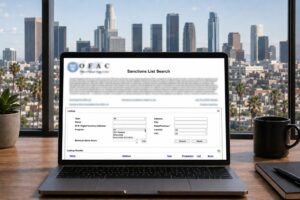
Economic sanctions, especially those related to Russia and Iran, routinely make news headlines. However, the underlying legal changes that occur can significantly impact the operations of organizations engaging in cross-border commerce, risking exposure to relevant legal repercussions. It is therefore imperative for the legal counsel of organizations facing such sanctions risks to appreciate the legal landscape of U.S. economic sanctions, which is constantly changing based on U.S. foreign policy and national security interests, to ensure compliance with applicable legal authorities. This primer on U.S. sanctions is intended as a preview to the January 11 U.S. Economic Sanctions 101 Webinar: a comprehensive introduction for practicing attorneys on U.S. economic sanctions laws and regulations administered by the U.S. Department of the Treasury’s Office of Foreign Assets Control (“OFAC”). It provides a practical guide to navigating U.S. economic sanctions, explaining how the main sanctions authorities work and how legal counsel can identify and manage sanctions risk for their clients.
What Are U.S. Economic Sanctions?
In general, U.S. economic sanctions programs prohibit U.S. persons—to varying degrees depending on the underlying legal authorities—from engaging in transactions involving sanctioned targets, whether directly or indirectly, unless authorized by OFAC or statutorily exempt. They can also require U.S. persons to block the property interests of sanctioned targets that are or come within their possession or control (a.k.a., “full blocking sanctions”). Sanctioned targets can include countries (e.g., Iran and Cuba), specified geographic regions (e.g., Crimea), and specific individuals and entities (e.g., persons identified on OFAC’s Specially Designated Nationals and Blocked Persons (“SDN”) List).
The term U.S. persons means any U.S. citizen, permanent resident alien, entity organized under the laws of the U.S. (including their foreign branches), or any person in the U.S. However, OFAC’s Iran and Cuba programs also extend their prohibitions to foreign-owned/controlled subsidiaries of U.S. persons. In addition, most programs extend their prohibitions to foreign persons who cause a U.S. person to engage in a prohibited transaction, directly or indirectly (e.g., a foreign person remits payment in U.S. dollars to a sanctioned target between two foreign banks for goods/services, where an intermediary U.S. bank typically processes the transfer). Finally, even where there is no U.S. nexus to a transaction for the foregoing prohibitions to apply, foreign persons can risk exposure to so-called “secondary sanctions” in dealing with a sanctioned target (e.g., becoming subject to full blocking sanctions themselves).
Who Administers U.S. Economic Sanctions?
OFAC administers U.S. economic sanctions laws—comprised of various statutes and Executive orders—by implementing regulations in 31 C.F.R. Chapter V, and enforcing them (i.e., civil enforcement). These laws and regulations are grouped into specific sanctions programs (currently 38 such programs) and can generally be divided into (1) country-related programs (e.g., Russia, Cuba, and Iran); and (2) thematic programs (e.g., counter-narcotics/-terrorism). Although the agency’s actions are governed by the Administrative Procedure Act (“APA”), courts are extremely deferential to OFAC’s actions because they are an exercise of the Executive branch’s authority in the realm of foreign affairs.
What Are The Relevant Legal Authorities?
The statutory basis for most OFAC sanctions programs is the International Emergency Economic Powers Act (“IEEPA”), 50 U.S.C. § 1701, et seq. IEEPA empowers the President to unilaterally exercise broad sanctions authority by declaring a national emergency in dealing with foreign threats to the national security, foreign policy, or economy of the U.S. In doing so, the President will issue an Executive order (“E.O.”) that: (1) specifically identifies the sanctioned target; and/or (2) empowers the heads of agencies (typically the Secretary of the Treasury) to identify targets according to defined designation criteria. Such authorities are typically delegated down to OFAC, including for the identification of targets and implementation of regulations.
To illustrate the composition of an OFAC sanctions program: the agency’s Burma-related program is based on E.O. 14014, which President Biden issued in accordance with his IEEPA authority. OFAC’s implementing regulations are codified in 31 C.F.R. Part 525, which include relevant prohibitions, applicable definitions/interpretations, and licensing-related matters. Sanctionable targets under the program include individuals and entities determined to have engaged in conduct of fulfilled a status specified under E.O. 14014. While Burma is an example of a list-based program (i.e., targets are limited to individuals and entities identified on OFAC administered sanctions lists), there are also: (1) comprehensive sanctions programs such as the embargo on Cuba; (2) hybrid programs such as Iran that impose an embargo on the entire country while designating specific persons on various OFAC lists; and (3) the unique sanctions programs targeting Russia and Venezuela.
Violations And The Importance Of Compliance
Violations of OFAC-administered sanctions laws and regulations can lead to civil and/or criminal enforcement actions by the U.S. government, including significant monetary penalties, imprisonment, or both. While organizations that have engaged in potential violations generally receive a mitigated enforcement response for voluntarily self-disclosing to the U.S. government, the employment of a risk-based approach to sanctions compliance is encouraged by developing, implementing, and routinely updating a sanctions compliance program (which may also act as a mitigating factor in an enforcement response). The importance of compliance is underscored by the strict liability nature of sanctions laws, where a person can be held liable even if they inadvertently violated relevant prohibitions.
This article was first published with the California Lawyer’s Association eNews for January 2024.
The author of this article is Kian Meshkat, an attorney specializing in U.S. economic sanctions and export controls matters. If you have any questions please contact him at meshkat@meshkatlaw.com.